The name Mahsa Amini has become the chant of liberation for women in Iran, sparking solidarity for women’s rights across the world. The beginning of this revolution came at a great cost, however, the life of an innocent 22-year old woman.
On September 13, Mahsa Amini had been visiting the capital of Iran, Tehran, when she was arrested and detained by the morality police because her hijab did not fully cover her hair. This sect of law enforcement is responsible for enforcing strict dress codes for women across the nation. The morality police are erratic, some will let women off with a warning, others will arrest and detain them. This domineering threat is constantly on the minds of Iranian women, who are always in a state of fear over what they are wearing. In this case, Mahsa Amini was captured and detained, where she died a few days later of a “heart attack” which was said to be caused by pre-existing conditions. Her father denies this claim, affirming instead that she was beaten, tortured, and killed by officers. The authorities have not allowed the family to see her body, and an investigation into the cause of her death will be released in two weeks.
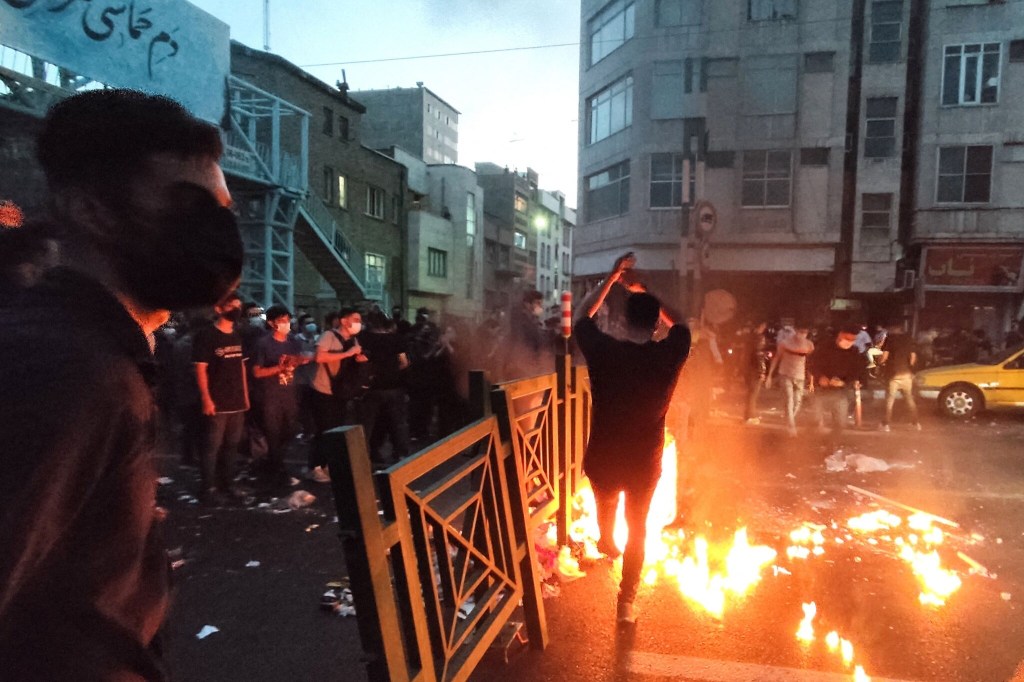
Public response to Amini’s death was almost immediate, as cars lined the block outside of the hospital where her body lay. The anti-government protests have spread to over 80 cities across Iran for two weeks, and they continue to gain momentum. Women, who have been leading this movement, have been burning their hijabs, cutting their hair, and confronting the security forces. Videos online show mothers chopping their locks in their homes and women dancing in the street with their hair free, while some protestors are simply going about their day to day life without a head scarf. Men are supporting the cause, too, even men in power like the former president of Iran.
The government’s efforts to immobilize these protests have been extreme, the most notably being mass internet restrictions across the nation. Women claim that they were threatened with rape if they did not stop, and so far 76 protestors have died with many more injured and arrested. Unlike other nations, protests in Iran are rare because it is very dangerous for the people; there must be a great desire and intuition that protesting is the last resort, which has been clear in this movement.
Although Mahsa Amini’s death is a tragedy, she did not die in vain. Women across Iran and the world are fighting back against the institutions that continue to oppress and control them. The courage of every protestor in Iran cannot be understated, and I have confidence that their efforts will ensure a more liberated future for themselves and their daughters.
Works Cited
Al Jazeera. “Women, Life, Freedom: The Chants of Iran’s Protests.” Protests News | Al Jazeera, Al Jazeera, 28 Sept. 2022, https://www.aljazeera.com/podcasts/2022/9/28/women-life-freedom-the-chants-of-irans-protests.
Gritten, David. “Iran Protests: Death Toll Rises to 76 as Crackdown Intensifies – Rights Group.” BBC News, BBC, 28 Sept. 2022, https://www.bbc.com/news/world-middle-east-63047363.
Rezvani, Arezou, and Steve Inskeep. “The Protests Won’t Lead to Regime Change, Iran’s Foreign Minister Tells NPR.” NPR, NPR, 27 Sept. 2022, https://www.npr.org/2022/09/27/1125270201/iran-foreign-minister-protests.
Yeung, Jessie, et al. “Iran Protests Rage as Mahsa Amini’s Father Says Authorities Lied about Her Death.” CNN, Cable News Network, 23 Sept. 2022, https://www.cnn.com/2022/09/22/middleeast/iran-protests-mahsa-amini-father-internet-blackout-intl-hnk/index.html.
 Drops of Jupiter
Leave a comment